
 English
 Français
 Italiano
 Nederlands
 Deutsch
 Español
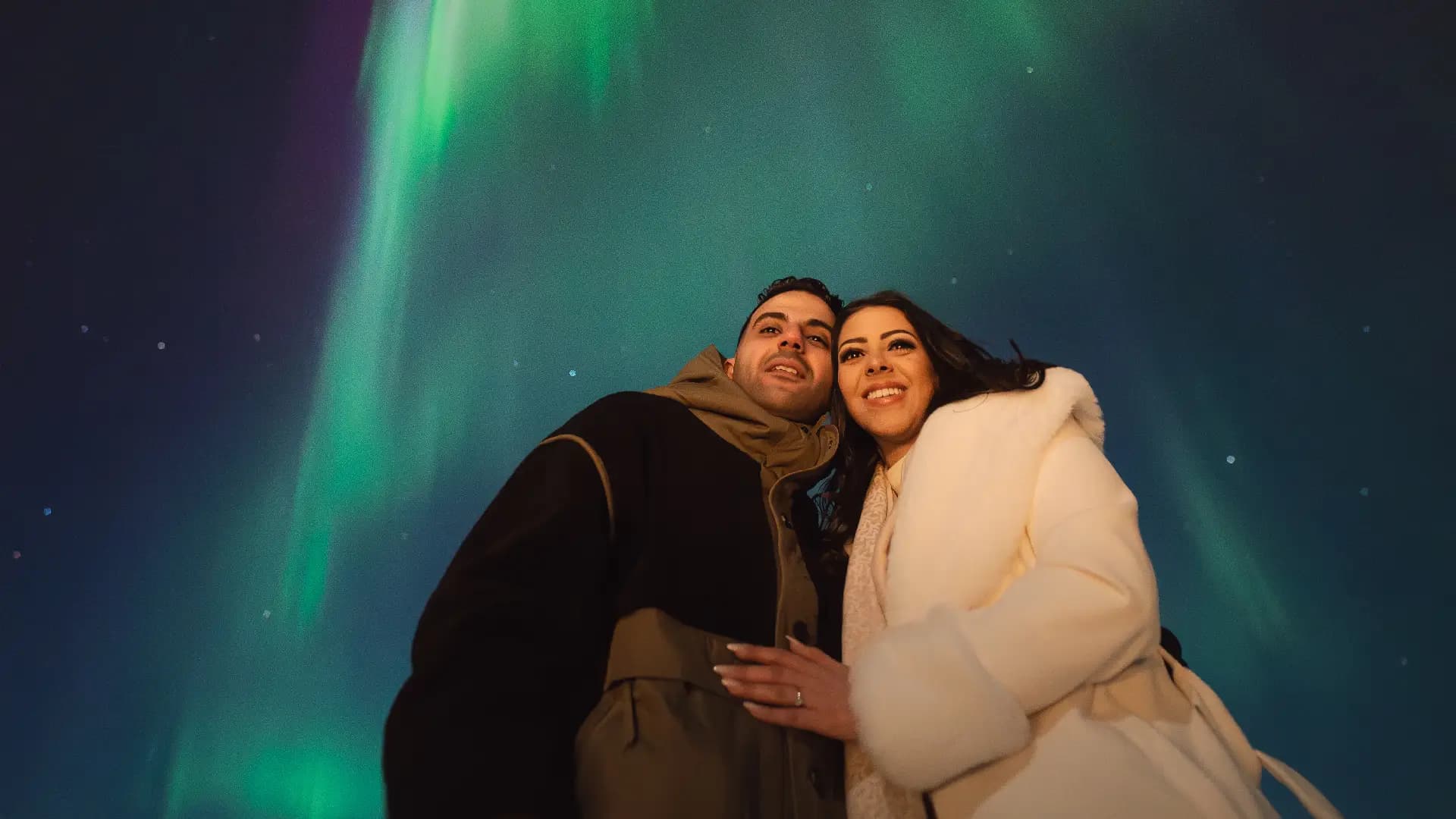
Los mejores lugares para ver la aurora boreal se encuentran cerca del Círculo Polar Ártico, donde los cielos oscuros y la fuerte actividad auroral crean las condiciones de observación perfectas. Países como Finlandia, Noruega, Islandia, Suecia y Canadá se encuentran entre los principales destinos para la observación de auroras boreales, atrayendo a viajeros de todo el mundo cada invierno.
Las auroras boreales son uno de los fenómenos más fascinantes de la naturaleza, y atraen a viajeros de todo el mundo para presenciar su colorida danza en el cielo nocturno. Aunque las auroras se pueden ver en varios países del norte, ciertas regiones ofrecen oportunidades especialmente buenas para avistarlas.
Los mejores lugares para ver la aurora boreal
| Destino | Por qué es genial | Mejores meses |
|---|---|---|
| Tromsø, Noruega | Situado dentro de la zona auroral con frecuente actividad de auroras boreales. | septiembre – marzo |
| Laponia, Finlandia | Cielos oscuros, naturaleza virgen y excelente visibilidad de auroras. | septiembre – abril |
| Islandia | Fácil acceso para ver auroras boreales combinado con paisajes dramáticos. | septiembre – marzo |
| Abisko, Suecia | Conocido por sus cielos despejados y sus avistamientos seguros de auroras boreales. | septiembre – marzo |
| Yellowknife, Canadá | Uno de los mejores lugares de Norteamérica para ver la aurora boreal. | Agosto – Abril |
En este artículo, exploramos los cinco mejores lugares para ver las auroras boreales y compartimos consejos sobre el tipo de entorno en el que es más probable que las experimentes. Si alguna vez te has preguntado ¿Dónde se pueden ver las auroras boreales?, continúa leyendo para conocer los lugares más confiables y las condiciones de visualización.
5 Key Takeaways from the Article
- The highest chances of seeing the northern lights are near the Arctic Circle.
- The top five countries for aurora hunting are Norway, Finland, Iceland, Sweden, and Canada.
- La visibilidad depende de una combinación de ubicación geográfica, clima, hora del día y condiciones ambientales.
- Las mejores oportunidades para ver auroras son en zonas oscuras y abiertas con una mínima contaminación lumínica.
- This article offers detailed tips on where can you see the northern lights most reliably.
¿En qué países se pueden ver las auroras boreales?
The highest likelihood of seeing the northern lights is near the Arctic Circle. As summarized well in the article The Northern Lights – Everything You Need to Know:
“The Aurora Borealis are mainly visible in the north and polar regions, but during strong geomagnetic storms, they can extend further south.”
Los cinco destinos principales para ver la aurora boreal son Noruega, Finlandia, Islandia, Suecia y Canadá. Esemos cada uno de ellos más de cerca.
1. Northern Lights in Norway
Norway is one of the most popular Northern Lights destinations in Europe, and especially Tromsø and its surrounding areas offer excellent conditions for witnessing this magical phenomenon. Its location north of the Arctic Circle guarantees a long aurora season, typically from September to March. In Norway, you can combine Northern Lights viewing with other Arctic experiences, such as dog sledding or exploring the majestic fjords.
2. Northern Lights in Finland
Finland is known worldwide for its stunning Northern Lights. The article “Where are the Northern Lights?” gives more detailed insights into where to go aurora hunting in Finland:
“The Lapland regions, such as Rovaniemi, Inari, Kilpisjärvi, and Saariselkä, are the most popular places to admire the aurora borealis.”
According to the Finnish Meteorological Institute, in the southernmost parts of the country – for example, in the Helsinki area – only one night per month is statistically likely to offer visible auroras.
As we noted in our earlier article: “Finnish Lapland is one of the most stunning places in the world to experience the beauty of natural phenomena, and the northern lights, in particular, have captivated travelers for centuries.”
You can read more about the topic here.
3. Northern Lights in Iceland
Iceland is one of the most fascinating Northern Lights destinations in the world – not only because of the phenomenon itself, but also thanks to the surrounding natural scenery. During the winter months, especially between September and April, the auroras often appear in Iceland’s dark and wide-open areas. Locations outside the capital Reykjavík, such as Þingvellir, Hella, and the well-known Golden Circle route, offer great opportunities for spotting the northern lights.
Light pollution is minimal in Iceland, and the landscapes are truly unique: you might see the auroras shimmering above glaciers, silhouetted against volcanoes, or glowing over black sand beaches.
4. Northern Lights in Sweden
Swedish Lapland, and particularly Abisko National Park, is one of the most renowned and reliable places in Europe to see the northern lights. The area is known for its exceptionally clear skies, as Abisko lies in a so-called “blue hole” – a microclimate zone that often has fewer clouds than the surrounding regions. This makes it a top destination for aurora seekers.
5. Northern Lights in Canada
Canada is home to vast, remote regions with little to no light pollution, making it one of the best countries in the world for viewing the northern lights. The Yukon and Northwest Territories, especially Yellowknife, are famous for their frequent and intense auroral activity. In fact, Yellowknife is often called the Aurora Capital of North America.
In what kind of place are you most likely to see the northern lights?
The visibility of the northern lights is influenced by several factors, including geographic location, climate, time of day, and environmental conditions. As mentioned in the article “Best Time to See the Northern Lights 2026”,
“The best time to see the Northern Lights is usually at night when the sky is at its darkest and geomagnetic activity is often at its peak.”
Let’s now take a closer look at the types of locations you should seek out when hunting for the northern lights.
In a dark place without light pollution
Darkness is the most important factor when it comes to seeing the northern lights. Lights from cities and populated areas significantly reduce visibility, so the best place to observe the auroras is somewhere completely free from light pollution.
The farther you get from artificial lighting, the brighter the northern lights will appear – often with more vivid and intense colors.
In an open area, such as by a lake
An open landscape allows for a wider view of the sky, which is essential when observing the Aurora Borealis. Lakeshores, open fields, or high plateaus provide unobstructed views toward the horizon. In this kind of setting, you can take in the full display – the auroras may stretch wide and move across the sky in a breathtaking performance.
At a high location, such as in the mountains
High-altitude locations, such as mountains or Arctic fells, can offer clearer skies thanks to drier air and fewer clouds at elevation. There is also typically less light pollution the higher you go.
The mountainous surroundings create a dramatic backdrop for viewing the northern lights, making the experience all the more magical and unforgettable.
Fuentes
Finnish Lapland – Best place to see the northern lights
Finland Northern Lights – 10 Most Common Questions
Where are the northern lights?
Best time to see the Northern Lights 2026
The Northern Lights-Everything You Need to Know